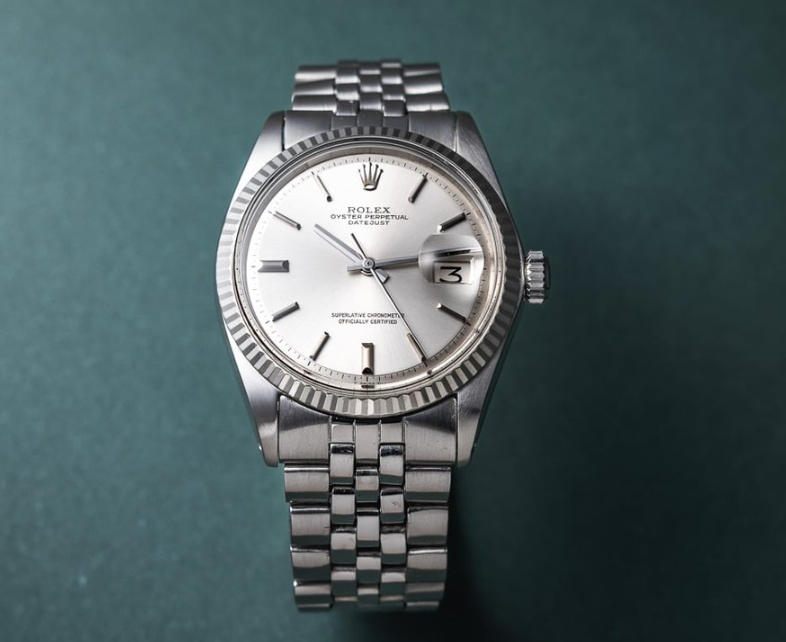
The Rolex Datejust reference 1601 remains one of the most recognizable vintage Datejust designs.Introduced in 1959, the reference helped establish a combination that many watch enthusiasts now
associate with the classic Datejust: a 36mm case, fluted bezel, date display with Cyclops lens,pie-pan dial and, frequently, a Jubilee bracelet.
For anyone studying a Rolex Datejust 1601 replica, understanding the original reference is more useful than relying on labels such as “AAA,” “1:1,” or “super clone.” Those terms do not describe an established technical standard. Case proportions, dial construction, bezel geometry, date-window placement and bracelet details provide much more useful points of comparison.
What Is the Rolex Datejust 1601?
The Rolex Datejust 1601 belongs to the four-digit generation of vintage Datejust watches. The reference appeared in 1959 and is generally associated with production through the 1970s. Its combination of restrained proportions and distinctive design details makes it important when examining how the Datejust evolved into the watch we recognize today.
One of the easiest ways to understand the 1601 is to compare it with other Datejust references from the same generation. The ref. 1600 used a smooth bezel, while the ref. 1601 is best known for its fluted bezel. The related ref. 1603 used an engine-turned bezel.
| Reference | Typical Bezel Style | General Character |
|---|---|---|
| Datejust 1600 | Smooth | Clean and understated |
| Datejust 1601 | Fluted | Classic and immediately recognizable |
| Datejust 1603 | Engine-turned | Sportier vintage appearance |
Why the 36mm Proportions Matter
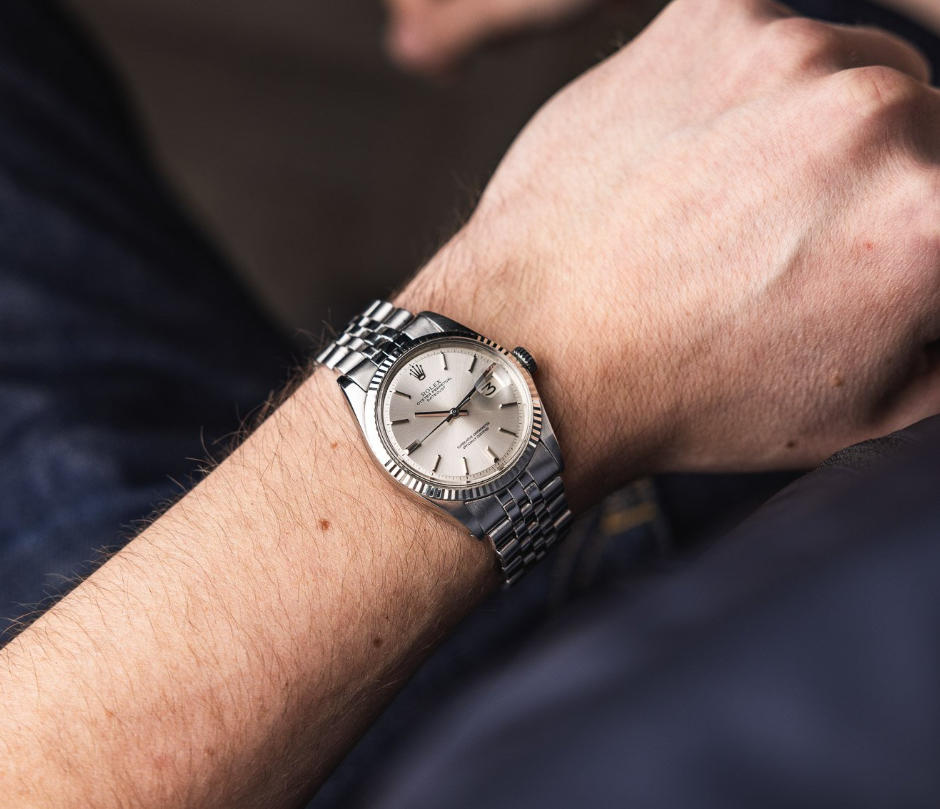
Modern watches have made larger cases common, but the traditional Datejust formula was built around much more compact proportions. The 36mm case is therefore an important part of the visual identity of the Datejust 1601. Readers interested in how this classic case size evolved can also explore modern Datejust 36 designs for a comparison with later interpretations of the same 36mm format.
Diameter alone does not tell the complete story. Lug shape, bezel width, dial opening, crystal profile and bracelet width all influence how a Datejust looks on the wrist. A watch can technically measure around 36mm while still looking noticeably different if these proportions are incorrect.
This is one reason that evaluating a Datejust 1601 replica only from its listed case diameter can be misleading. Side-profile photographs and straight-on dial photographs often reveal much more about the overall proportions.
The Pie-Pan Dial Is One of the 1601’s Defining Features
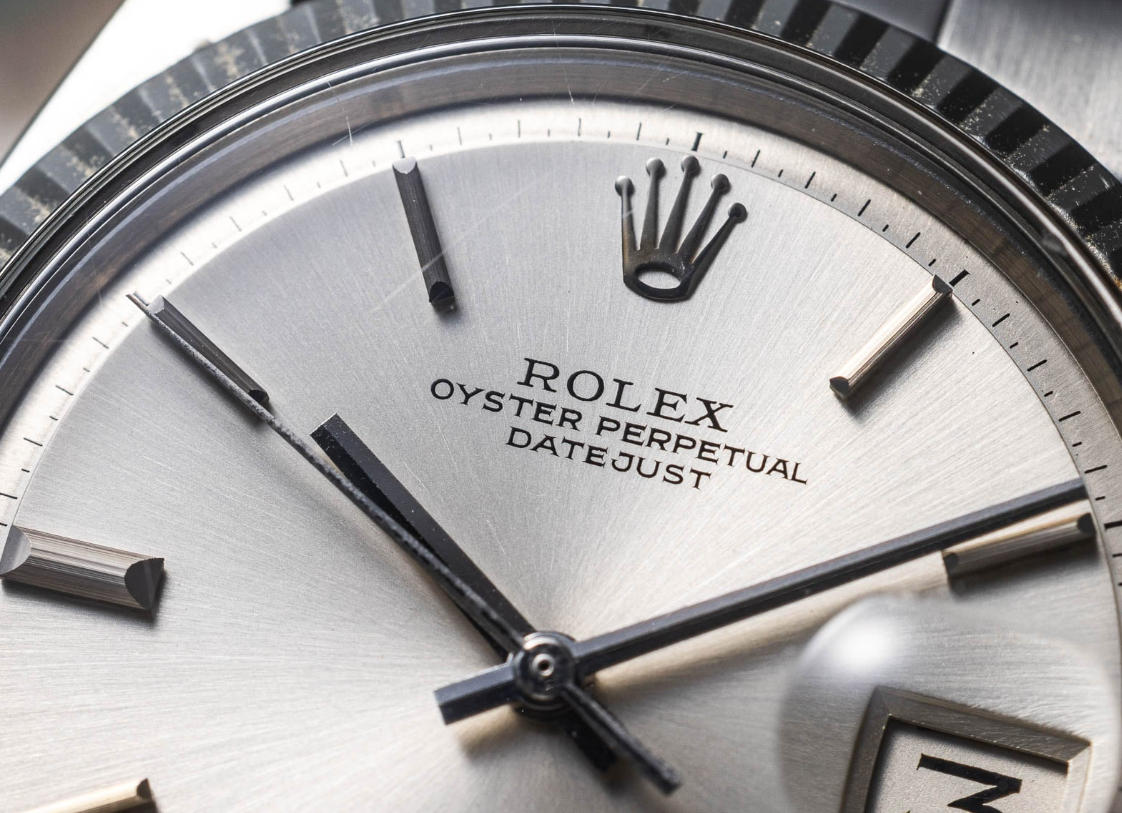
Among vintage Datejust characteristics, the pie-pan dial is particularly important. Rather than appearing completely flat from the center to the outer edge, the dial has a distinctive sloping outer section. This construction creates additional visual depth around the minute track.
Later Datejust generations moved toward flatter dial designs, which makes the pie-pan profile useful when distinguishing the visual character of a four-digit reference such as the 1601.
Dial details worth examining
- The transition between the central dial and the sloping outer edge
- The proportions and alignment of the applied hour markers
- The spacing of the minute track
- The position and size of the date aperture
- The shape and length of the hands
- The printing of the text and coronet
These relatively small details often matter more visually than exaggerated marketing descriptions. A poorly shaped outer dial or incorrectly positioned markers can change the character of the watch even when the overall colour scheme looks convincing.
The Fluted Bezel Defines the 1601 Look
The fluted bezel is another feature strongly associated with the Datejust 1601. Rolex originally developed fluting as a functional element on earlier Oyster cases, although it later became one of the brand’s most recognizable visual signatures.
On a vintage-style Datejust, the bezel should work together with the case rather than dominate it. The width of the bezel, the sharpness of the individual flutes and the angle at which they reflect light all influence the appearance of the watch.
What to compare on a Datejust 1601-style replica
When comparing photographs, look beyond whether the bezel is simply described as “fluted.” Check whether the flutes are too broad, too shallow or excessively polished. The relationship between the bezel and the acrylic-style crystal profile is also important to the vintage appearance.
Cyclops Lens and Date-Window Alignment
The Datejust is closely associated with its date display at 3 o’clock and the Cyclops magnification lens positioned above it. Because these components sit close together, small alignment problems can be surprisingly noticeable.
When examining a Rolex Datejust 1601 replica, useful points to inspect include the centering of the date numerals, the position of the date window, the alignment of the Cyclops and the apparent magnification when viewed directly from above.
Date-wheel typography is another useful detail. Numeral thickness, spacing and vertical alignment can significantly affect the appearance of the dial.
Jubilee Bracelet vs. Oyster Bracelet
The Jubilee bracelet is strongly connected with the visual identity of the Datejust and is often the bracelet people imagine when they picture a vintage 1601. However, vintage Datejust watches can also be found with Oyster bracelets and other period-correct configurations.
From an appearance perspective, the Jubilee changes how the entire watch presents itself. Its smaller links create more reflections and give the watch a dressier character, while an Oyster-style bracelet creates a simpler and slightly more restrained appearance.
Bracelet details that deserve attention
- End-link fit against the case
- Center-link proportions
- Clasp shape and thickness
- Bracelet taper
- Overall flexibility and articulation
These details are especially useful when comparing different Datejust 1601-style watches because bracelet construction can vary considerably even when the dial and case appear similar.
The Original 1601 Used Non-Quickset Movements
Vintage Datejust 1601 watches are associated with automatic movements such as the Rolex calibres 1565 and 1575. An important historical characteristic of this generation is the absence of the later quickset-date function.
On a non-quickset Datejust, changing the date requires advancing the hands through successive 24-hour cycles. Later generations introduced a more convenient independently adjustable date.
This historical distinction matters because a modern replica movement does not necessarily reproduce the operating characteristics of the original watch. A movement may instead prioritize modern convenience, availability or serviceability.
Why “AAA” and “1:1” Are Not Useful Technical Standards
Searches for vintage-inspired watches frequently include descriptions such as AAA replica Rolex Datejust 1601 or “1:1 Datejust.” These labels can sound precise,but there is no universal independent grading system defining what an AAA or 1:1 replica must contain.
Two watches advertised with the same grade can therefore differ significantly in case construction,dial printing, bracelet quality, movement architecture and finishing.
A more useful evaluation focuses on observable specifications rather than the grade printed in a product title.
| Area | What to Examine |
|---|---|
| Case | Diameter, lug profile, thickness and polishing |
| Dial | Pie-pan shape, markers, printing and minute track |
| Bezel | Flute geometry, width and finishing |
| Date | Window position, numeral typography and Cyclops alignment |
| Bracelet | End links, taper, articulation and clasp construction |
| Movement | Architecture, functions, beat rate and serviceability |
Common Details That Can Look Wrong
Vintage designs can actually be difficult to reproduce convincingly because their appeal depends on proportion rather than dramatic complications. On a Datejust 1601-inspired watch, several small inconsistencies can combine to produce an appearance that feels noticeably different from the vintage reference.
1. A dial that looks too flat
The pie-pan profile contributes substantially to the depth of the original design. A completely flat dial removes much of the visual character associated with the four-digit Datejust generation.
2. An oversized or overly sharp bezel
A fluted bezel can be technically present while still having incorrect proportions. Excessively deep or wide fluting often gives the watch a more modern appearance than the vintage 1601.
3. Incorrect date placement
Because the Cyclops draws attention directly toward the date window, poor numeral centering or incorrect magnification becomes easy to notice.
4. Modern-looking case proportions
Thick lugs and a bulky case can make a watch resemble a later Datejust generation even when it uses a vintage-style dial.
5. Bracelet mismatch
End links that do not follow the curvature of the case or an incorrectly proportioned Jubilee bracelet can change the appearance of the entire watch.
1601 vs. Later Datejust References
Understanding what came after the 1601 also helps explain why collectors consider it distinctive. Later Datejust generations introduced flatter dials, quickset movements and eventually sapphire crystals and newer movement architectures. Another interesting direction in the collection’s evolution was the Datejust Oysterquartz ref. 17013 , which retained classic 36mm proportions while introducing an integrated bracelet design and quartz movement.
These changes improved practicality, but they also changed the watch’s visual character. The combination of the pie-pan dial and vintage case proportions therefore remains one of the easiest ways to recognize the earlier Datejust aesthetic.
What Makes the Datejust 1601 Design Enduring?
The Datejust 1601 does not depend on an unusual complication or an oversized case to attract attention. Its appeal comes from the relationship between a relatively small number of elements: the 36mm case, fluted bezel, pie-pan dial, Cyclops date display and bracelet.
That simplicity is also why small proportional differences matter so much. When evaluating a Rolex Datejust 1601 replica, focusing on individual marketing labels is less informative than examining how accurately those fundamental design elements work together.
Final Thoughts
The Rolex Datejust ref. 1601 occupies an important place in the history of the Datejust. Introduced in 1959, it helped establish a design language that remains recognizable decades later.
For readers researching Datejust 1601 replicas, the most useful approach is to first understand the original watch. Pay attention to case proportions, the pie-pan dial, fluted bezel geometry,Cyclops and date alignment, bracelet construction and movement functionality rather than relying exclusively on terms such as AAA or 1:1.
Understanding those details makes it easier to identify where two apparently similar watches differ and, more importantly, explains why the original Datejust 1601 design remains so distinctive.
References
- Rolex — historical information on the Datejust and fluted bezel design.
- Phillips — historical reference information for the Rolex Datejust ref. 1601.
- Independent vintage-watch reference material covering the Datejust 1600-series and its movements.
