The 2026 Datejust Dial Changes Are Bigger Than One Green Ombré Watch
It would be easy to look at the 2026 Rolex Datejust and assume that the story begins and ends with one green dial. Rolex certainly gave the green ombré Datejust 41 plenty of attention, and understandably so. It is colourful without being loud, recognisably modern without making the Datejust look like a different watch. Spend a little longer looking through the updated Datejust range, though, and something more interesting begins to emerge. Rolex has made a series of quieter changes across the collection, particularly around dial colours and Roman numeral designs. None of them fundamentally changes what a Datejust is, but together they make the 2026 collection feel noticeably different from the one buyers were looking at a year ago. For us at Rolex Datejust replica watches UK, these small changes are especially interesting. The Datejust has always been a watch where tiny details matter. The shape of a numeral, the width of a bezel or the tone of a green dial can change the character of the entire watch.
The green ombré dial deserves the attention
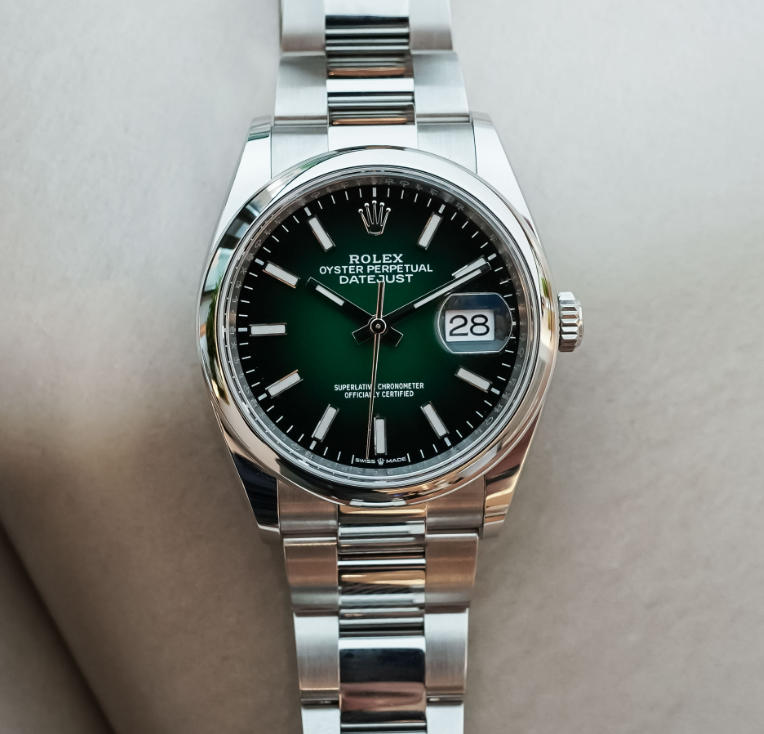
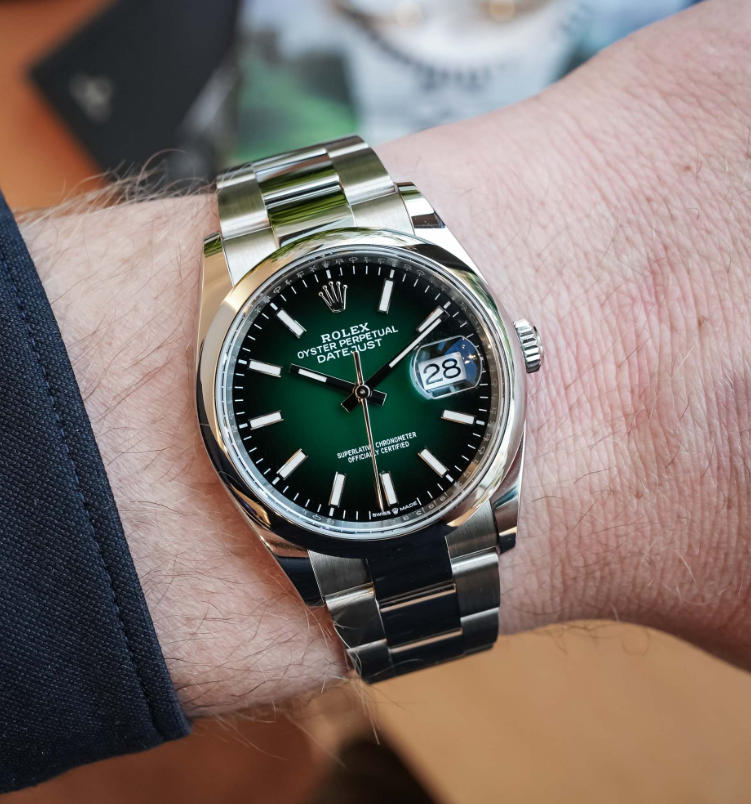
The headline model for 2026 is the Datejust 41 with a green lacquer ombré dial. The centre begins in a brighter green before the colour gradually darkens towards the edge, eventually approaching black around the minute track. That transition matters because it gives the dial much more depth than a conventional flat green finish. In bright daylight the centre looks lively and fresh. Under softer indoor lighting, the darker edge becomes much more noticeable and the watch takes on a more restrained appearance. Rolex creates the effect by applying green lacquer across the dial before spraying black lacquer towards the perimeter in concentric passes. It is a relatively simple idea on paper, but getting the transition even is what makes the finished dial convincing. The most useful thing to know is that green ombré is not limited to a single 41mm configuration. The colour has now appeared across different Datejust combinations, including 36mm and 41mm models. Readers interested specifically in this finish can also see our closer look at the Rolex Datejust 41 green ombré dial, where we look more closely at how the gradient changes the familiar Datejust design.
Why this dial matters for replica Datejust watches
A plain black, silver or blue dial can hide small manufacturing differences surprisingly well. An ombré dial cannot. On a well-made Rolex Datejust 41 green ombré replica, the most important detail is not simply whether the dial is green. The transition needs to happen gradually and consistently. If the centre is too bright, the outer ring too black or the transition too abrupt, the entire dial can look artificial. The printing also matters. White text sits against several different shades of green as the eye moves across the dial, so inconsistent printing tends to be easier to notice than it is on a conventional sunburst finish. That makes the 2026 green ombré Datejust an interesting reference point for anyone comparing replica versions. Colour matching alone is not enough. Depth, surface finish, marker placement and the behaviour of the dial under changing light all contribute to the final impression.
Datejust 36 and Datejust 41 still feel like different watches
The introduction of the same general dial idea across different case sizes also brings back an old Datejust question: 36mm or 41mm? The obvious difference is diameter, but numbers only tell part of the story. The Datejust 36 has the proportions most closely associated with the model’s long history. On the wrist, the bracelet feels visually connected to the case and the bezel occupies a relatively modest amount of space. It is compact without looking especially small, which is one reason the 36mm Datejust continues to work on such a wide range of wrists. The Datejust 41 has a stronger presence. There is more metal around the dial, the case appears broader and the overall impression is more contemporary. Even when both watches use similar dial colours, bracelets and bezels, they do not simply look like the same watch produced at two scales. That distinction becomes especially noticeable with the green ombré dial. On the 41mm watch, the larger surface makes the gradient one of the dominant parts of the design. On the 36mm version, the same idea feels a little more contained. For buyers comparing a Rolex Datejust 36 replica watch in the UK with a 41mm alternative, wrist presence is therefore more useful than simply asking which case diameter is technically preferable.
The quieter story is the new Roman numeral treatment
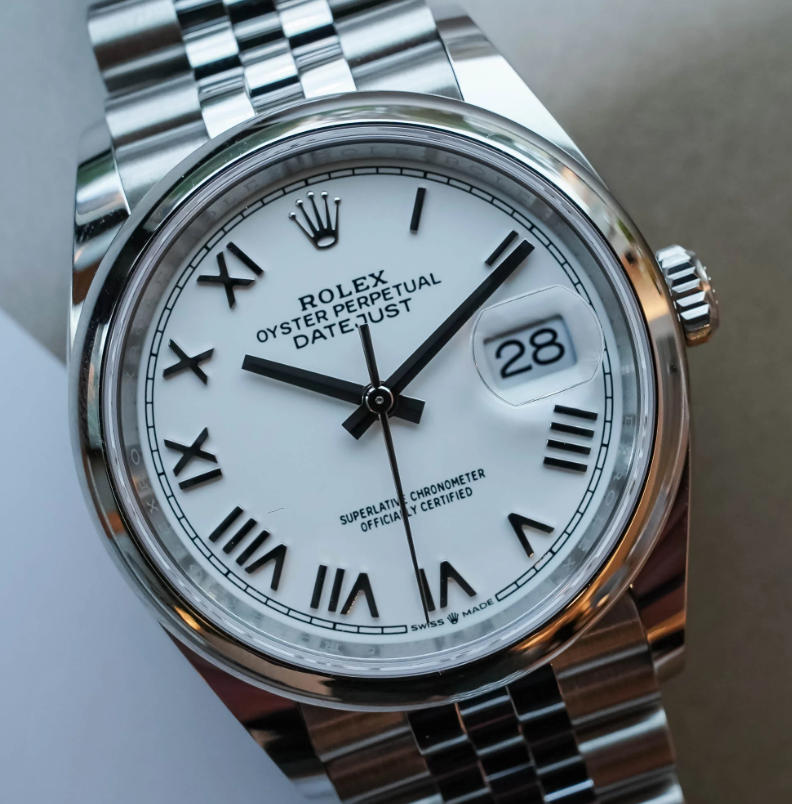
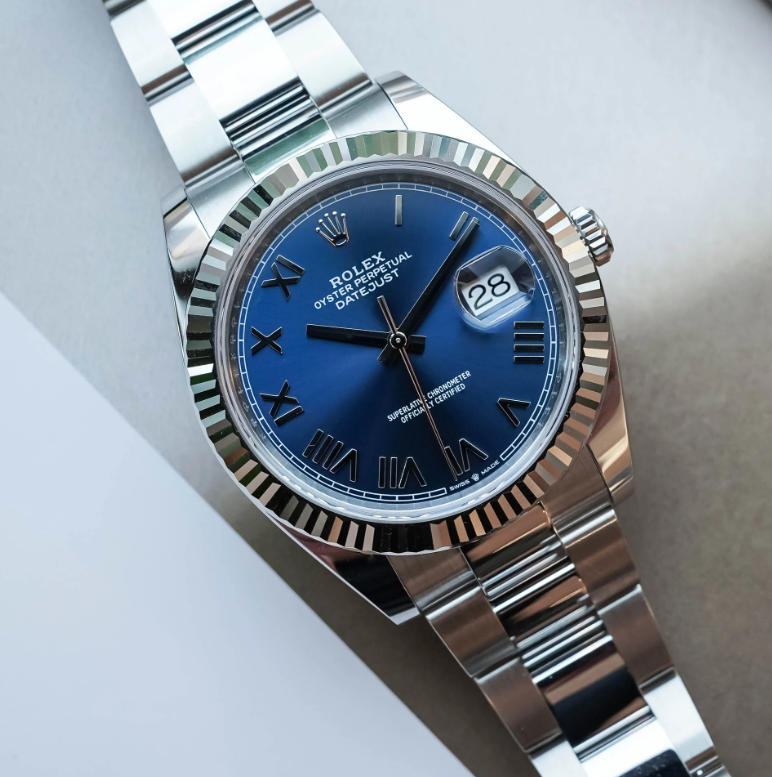
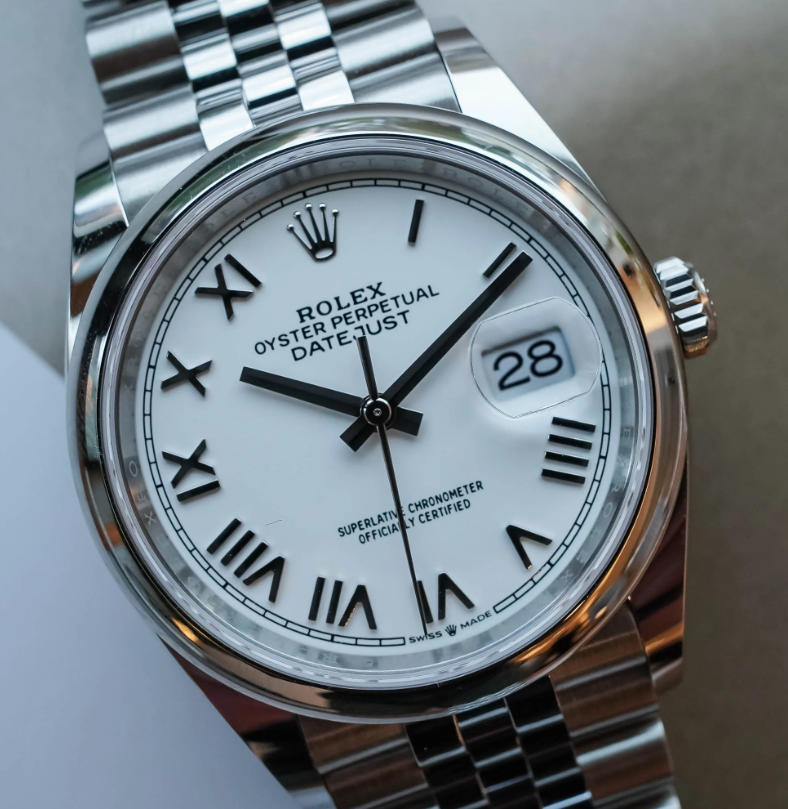
Green may get the photographs, but the more lasting change in the 2026 Datejust collection could be the revised Roman numeral dials. Roman numerals have been part of the Datejust vocabulary for years, but the newer execution looks cleaner and more architectural. Rather than feeling decorative in the traditional sense, the numerals now give certain versions of the Datejust a sharper appearance. The individual numeral elements appear more clearly separated, and their flatter, stronger shapes reduce some of the visual softness found on older Roman numeral Datejust dials. The result is still unmistakably Datejust, but it feels more contemporary. This is precisely the sort of change that is easy to miss when scrolling through product photographs. Put an older Roman dial beside a new one and the difference becomes far more obvious.
Small typography changes can completely alter a replica dial
Roman numeral watches are particularly unforgiving when it comes to replica production. With simple baton markers, slight differences in thickness can occasionally disappear at normal viewing distance. Roman numerals create far more edges, gaps and alignment points for the eye to inspect. Anyone assessing a 2026 Rolex Datejust Roman numeral replica dial should therefore pay attention to several things:
- the thickness of each numeral element;
- spacing between the individual sections;
- alignment around the dial;
- the relationship between the numerals and minute track;
- the finish of the applied metal surfaces;
- the colour match between the hands, markers and bezel.
These details are less exciting to describe than a new green dial, but they are often what separates a convincing Datejust from one that looks slightly wrong without the viewer immediately understanding why.
There is more colour across the 2026 Datejust range
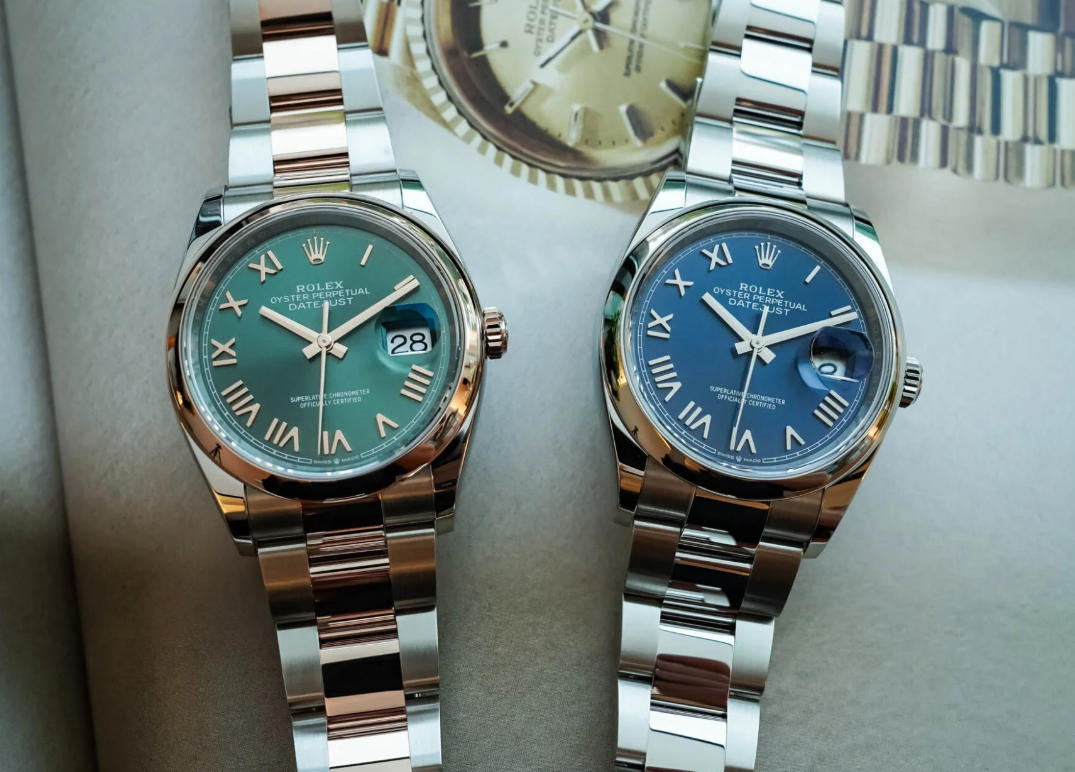
Another reason the 2026 update feels broader than the headline release suggests is the amount of colour now available across Datejust 36 and Datejust 41 configurations. Green continues to play an important role, but there are also white, blue, dark grey, pink, silver and warmer tones appearing across different combinations of steel, white gold, yellow gold and Everose gold. Not every colour is available with every case and bracelet combination, and that is part of the appeal of the Datejust. Rolex has rarely treated the collection as one watch with a list of interchangeable options. Certain dials belong naturally to particular metal combinations. A warmer dial can look completely different beside Everose gold than it would inside an all-steel case. Likewise, a dark dial paired with a fluted white-gold bezel gives a different impression from exactly the same case size with a smooth bezel.
Bracelet and bezel choices matter as much as the dial
Dial colour tends to dominate online photographs, but in everyday wear the bracelet and bezel still have an enormous influence on how a Datejust feels. An Oyster bracelet gives the watch a cleaner and slightly more restrained appearance. The Jubilee bracelet adds more visual texture and immediately pushes the design towards the classic Datejust look many people recognise from across a room. The same applies to bezels. A smooth bezel keeps the case visually simple. A fluted bezel catches light constantly and changes how prominent the watch appears on the wrist. That interaction is important when evaluating high quality Datejust replica dial and bracelet combinations. Looking at the dial in isolation does not tell the whole story. A very accurate dial can still feel wrong if the bezel profile is too thick or the Jubilee bracelet lacks the flexibility and visual rhythm associated with the genuine design.
The movement remains familiar
Although the visible changes for 2026 are concentrated around the dial and external configuration, the familiar modern Datejust mechanical architecture remains underneath. Current Datejust 36 and Datejust 41 models use Rolex calibre 3235, an automatic movement with approximately 70 hours of power reserve. That continuity is significant because it means the 2026 story is primarily about the appearance of the watch rather than a major mechanical redesign. For replica watches, this distinction is worth keeping clear. A replica movement may be designed to imitate the layout, function or appearance of calibre 3235, but it should not be described as a genuine Rolex 3235. Clear terminology makes an article more useful and avoids creating expectations that the watch itself cannot support.
What UK Datejust buyers are likely to notice first
For most people looking at the collection from the UK, the practical choice will probably still begin with three questions. Do you prefer 36mm or 41mm? Do you want Oyster or Jubilee? And do you prefer the cleaner smooth bezel or the more recognisable fluted version? The 2026 dials add another layer, but they do not replace those basic decisions. The green ombré is undoubtedly the most immediately recognisable new option. It works particularly well for someone who wants a Datejust that looks modern without losing the traditional case and bracelet formula. The revised Roman numeral models are subtler. They are likely to appeal more to somebody who already knows the Datejust range and appreciates changes that are obvious only after spending time with the watch.
What we would inspect on a 2026 Datejust replica
Because DatejustReplica is a UK-focused independent site covering Rolex Datejust replica watches, our interest goes beyond simply listing the genuine Rolex specifications. If we were assessing a replica based on one of these new configurations, the first areas we would examine would be:
- green ombré dial transition and whether it changes naturally from centre to edge;
- Roman numeral shape, spacing and alignment;
- Cyclops position and date-window alignment;
- fluted or smooth bezel proportions;
- case shape around the lugs;
- Oyster or Jubilee bracelet articulation;
- printing quality and hour-marker placement;
- movement function and date change rather than movement decoration alone.
None of these details by itself determines whether a replica is convincing. The Datejust works because all of its proportions are balanced. A small error repeated across the bezel, dial and bracelet is often more noticeable than one large specification difference on paper.
The Datejust did not need a dramatic redesign
That may be the most interesting thing about the 2026 update. Rolex has not tried to reinvent the Datejust. There is no radically different case and no attempt to turn it into something more obviously sporty. Instead, the brand has worked within a design that has been recognisable for generations. The green lacquer ombré dial gives the collection an obvious new focal point. The revised Roman numerals and expanded colour combinations make the broader range feel fresher without abandoning what people already like about it. For enthusiasts, that makes 2026 more interesting than it first appears. The biggest changes are not necessarily the ones that look dramatic in a press photograph. They are the details you start noticing after comparing different Datejust references side by side. And for anyone following the latest Rolex Datejust replica watches in the UK, those details are exactly where the meaningful comparisons should begin.
DatejustReplica is an independent watch publication and is not affiliated with, endorsed by or associated with Rolex SA. Rolex and Datejust are used for identification and editorial discussion.
